Text-to-Speech in Conversational AI: Giving Voice to Intelligence
Abhishek Sharma
AI & Conversational Systems Engineer
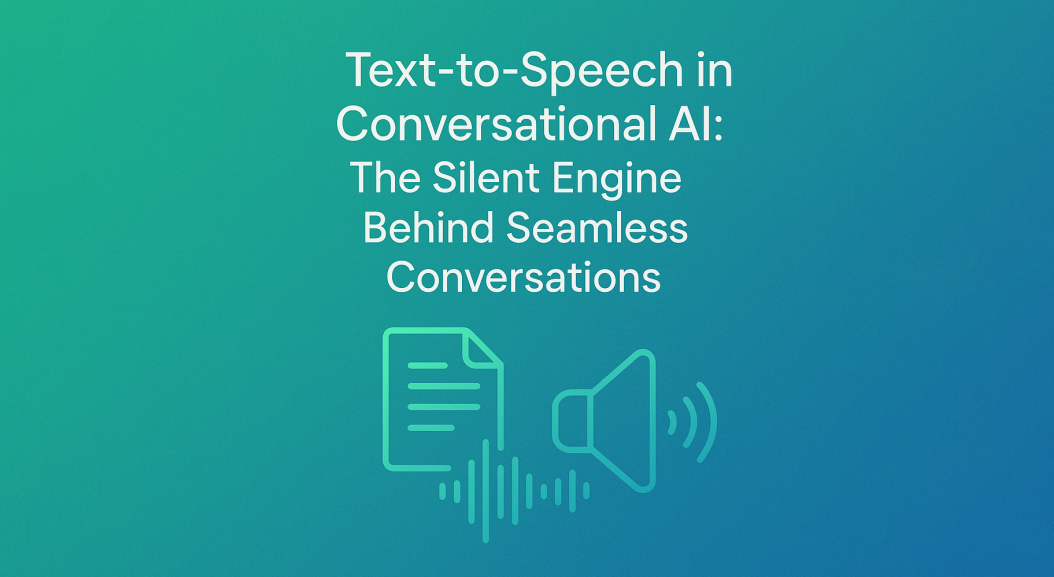
While speech-to-text brings human input into the digital realm, text-to-speech (TTS) gives voice to machines — completing the loop in conversational AI. From virtual assistants and bots to smart devices, TTS is the output stage in voice AI. It transforms text into natural-sounding audio that responds in real time.
But it’s more than just speaking. Today’s TTS must balance latency, emotion, clarity, and personalization — making your AI sound human, not robotic.
Key Insight
Text-to-speech (TTS) is no longer about reading text aloud. It’s a complex orchestration of emotion, latency, prosody, and real-time delivery. This blog explores what defines a good TTS model, how top providers compare, and what to expect in 2025.
On this page
What Makes a Good Voice?
- Voice Naturalness: The best TTS models excel in prosody — pronunciation, pacing, stress, rhythm, and emotional nuance.
- Latency: Two key metrics: TTFB (Time to First Byte) and Pre-speech Delay. Both influence responsiveness.
- Cost: Especially important at scale. Pricing and GPU utilization must be optimized.
- Language & Accent Support: Global applications demand multilingual capabilities.
- Customization: Branded voices and dynamic tone control are now essential features.
- Word-Level Timestamps: Critical for streaming playback, interruption, and alignment in multimodal UIs.
Core Components
- 1
Voice Naturalness and Expression
Modern TTS relies on rhythm, stress, pacing, and emotion to sound human — not robotic. Expressiveness defines realism.
- 2
Latency Benchmarks
Metrics like Time to First Byte (TTFB) and pre-speech delay shape the responsiveness of voice interfaces.
- 3
Top TTS Vendors
Providers like Cartesia, ElevenLabs, and Deepgram lead with different strengths: realism, speed, or cost-efficiency.
- 4
Customization and Branding
Custom voices, tone control, and word-level tuning allow enterprises to build unique branded assistants.
- 5
Streaming and Timestamps
Real-time agents need word-level timestamps and streaming playback for seamless experiences.
Leading TTS Providers in 2025
🧠 Cartesia
- Model: State-space neural architecture
- Cost: ~$0.02/min
- Median TTFB: 190ms
- Pre-speech Delay: 160ms
- ✅ Word timestamps
- ✅ Streaming and self-hosting support
⚡ Deepgram
- Focus: Speed and affordability
- Cost: ~$0.008/min
- Median TTFB: 150ms
- Pre-speech Delay: 260ms
- ✅ Word timestamps
- ❌ Customization not yet supported
🎭 ElevenLabs
Turbo v2 — rich in emotional range, TTFB: 300ms, Cost: $0.08/min
Flash v2 — faster and cheaper, TTFB: 170ms, Cost: $0.04/min
Note: Word timestamps are not available.
🧬 Rime
- Built for dialogue agents
- Cost: ~$0.024/min
- Median TTFB: 340ms
- ✅ Word timestamps & streaming APIs
- ✅ Pipecat-ready and customizable
Implementation Roadmap
- 1Choose a TTS engine aligned to your latency, fidelity, and deployment needs
- 2Benchmark TTFB and pre-speech delay for your actual user regions
- 3Use phoneme or prompt-based control for hard-to-pronounce terms
- 4Enable streaming and timestamp output for agents with interrupt/restart logic
- 5Customize voices to reflect brand tone or regional personas
Handling Mispronunciations
Even top-tier models struggle with acronyms or brand names. Use:
- Phoneme control (IPA or ARPAbet)
- Prompt-based substitutions (e.g., "GPU" → "gee pee you")
Why Word Timestamps Matter
Use them to:
- Align subtitles or captions
- Interrupt playback mid-sentence
- Reconstruct dialogue context in multimodal agents
{ "word_timestamps": { "words": ["What's", "the", "capital"], "start": [0.02, 0.3, 0.48], "end": [0.3, 0.36, 0.6] } }Real-time Streaming and the Future
TTS for assistants must be:
- Interruptible
- Low-latency
- Stream-mappable
Cartesia and Rime lead in streaming APIs today.
What’s Next in TTS?
- GPT-4o-mini-TTS: Fully steerable tone and pacing
- Groq + PlayAI: Ultra-fast TTS with <100ms latency and 30+ languages
Final Thoughts
In 2025, TTS is a strategic choice. It affects how your product sounds — and how it’s felt. Real-time voice agents need models that are fast, expressive, and customizable.
Your voice is your brand. Make it speak smart.
Written by
Abhishek Sharma
AI & Conversational Systems Engineer
Abhishek Sharma is an AI engineer at Zoice specialising in the technical foundations of conversational AI — real-time audio pipelines, LLM orchestration, voice activity detection, multi-agent systems, and production voice AI for Indian languages. He covers the engineering decisions behind how Zoice's voice, chat, and WhatsApp agents are built and scaled.
Keep reading
All articles
Built in India, Hosted in India: What Data Residency Actually Means for a Voice Stack
AI EMI Reminder Calls: Collections That Stay Polite, Compliant and Multilingual
AI Telecaller for Real Estate: Qualifying Every Lead Before Your Sales Team Starts
Ready to put an AI agent to work?
Deploy voice, WhatsApp, and chat agents across Indian languages — grounded in your knowledge and measured on every call.